Dnes Investor Gol Automedia Tialoto Az-Jenata Az-deteto Teenproblem Puls NasamNatam Imoti.net Rabota Start Blog Aha Snimka Niesme
 

About Bulgaria


Location - Bulgaria is situated in Southeast Europe and occupies the eastern part of the Balkan Peninsula.

To the north it borders on Romania, to the west on the Republic of Macedonia and the  Republic of Serbia, to the east on the Black Sea, to the south on Greece and to the southeast on Turkey's European part.

Relief - The relief of the country is diverse, including vast lowlands, planes, low hills, high and low mountains, valleys, river basins and deep gorges. The surface structures were formed during different geological eras. The average altitude of Bulgaria is 470 m. In the northernmost part of Bulgaria, to the south of the Danube River, lies the Danubian Hilly Plane, the largest plane in the country. The mountain range of Stara Planina lies between the Belogradchik Pass and Cape Emine on the Black Sea; to the south it borders on Sofia Valley and the Southern Balkan Valleys. The range reaches its highest elevation in the Troyan-Kalofer Mountain - Botev Peak (2376 m).To the south of Stara Planina and almost parallel to it the Sredna Gora Mountains lies. Its highest point is Golyam Bogdan Peak (1604 m). The Rila Massif and the Rho dopes are the highest on the Balkan Peninsula. They consist of the Rila Mountains (highest point - 2925 m), Pirin, the Rhodopes and the mountain group of Osogovo-Belasitsa. The sharp rocky peaks lend these mountains an alpine view. There are numerous Karts formations - caves, gorges, rock phenomena (in the regions of Trigrad, Velingrad, Dobrostan, Peshtera and Arda). In the eastern part of Bulgaria, by the Black Sea Coast, there are well outlined wide beaches. These occupy approximately 130 km of the Bulgarian Black Sea coast (378 km). The Kamchiya-Shkorpilovtsi Beach Line is the longest (12 km). These beaches are wide and strewn with fine sand.

Climate -Temperate continental with clearly marked four seasons.
A Mediterranean influence is felt in the country's southern regions.The average annual temperature is 10.5°C.
The average January temperature is around O°C.
Average summer temperatures rarely exceed 30°C.

History - The Bulgarian people is one of the most ancient. The Bulgarian state was founded on the present-day territory of Europe in 681 and ever since that time the name of the country has always been the same. What follows are some of the most significant dates and events in the history of Bulgaria:
885 - Cyril and Methodius created the Slavonic script
864 - 866 - Bulgaria adopted Christianity
1018- 1185 - Bulgaria fell within the limits of the Byzantine Empire and Rule
1185 - Restoration of the Bulgarian state
1396 - 1878 - Bulgaria was under the Turkish Yoke
1878 - 1944 - Bulgaria was a constitutional monarchy
1944 - 1989 - Bulgaria was a people's republic, governed by the communist party
Since 10 th of November, 1989  - Bulgaria has been a parliamentary republic.

Population - 8,228,006 / according to the census taken in 2000/; The population consists chiefly of Bulgars. There is a substantial minority of Turks, and smaller groups of Gypsies and Macedonians, although Bulgaria, with its historic claim to Macedonia, refuses to recognize Macedonians as distinct from Bulgars. Bulgarian is the predominant language.

Official language - Bulgarian; English, German, French and Russian is spoken in the country's resorts, hotels and restaurants.Alphabet - Cyrillic. Signs along international motorways, in airports and resorts are also spelled in Roman letters.

Religion - 86.6% of the population is Eastern Orthodox, 13% are Muslims. The Bulgarian Church is autonomous and headed by a Patriarch.

State government - Bulgaria is an independent state and the form of government is of people's democracy. All citizens have equal rights as the law is concerned disregarding sex, nationality, race, religion, education, occupation, social and material status. In 1991 a new Constitution of Republic of Bulgaria is approved. The Members of the Parliament are elected at free democratic elections.  Since July 2001 Bulgarians prime minister is Simeon Saksckoburgotski who is the ex-king of Bulgaria.
Economy - Bulgaria, a former communist country striving to enter the European Union, has experienced macroeconomic stability and positive growth rates since a major economic downturn in 1996 led to the fall of the then socialist government. The current government, elected in 2001, has pledged to maintain the fundamental economic policy objectives of its predecessor, i.e., retaining the Currency Board, practicing sound financial policies, accelerating privatization, and pursuing structural reforms. A $300 million stand-by agreement negotiated with the IMF at the end of 2001 will help the government maintain economic stability as it seeks to overcome high rates of poverty and unemployment.

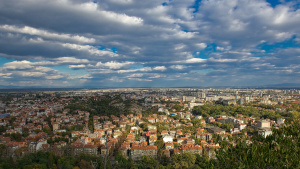
Capital - Sofia (pop. about 1,200,000)

Large Cities - Plovdiv, Varna, Bourgas, Veliko Turnovo

Buying information


Having in mind that in two years Bulgaria will be joining the European Union, the Bulgarian property market presents very good possibilities for potential investments which can be quite profitable in the long-term.

There are diverse offers on the market which can meet different requirements and have considerably better value for money than in other European destinations.

Most of the people looking for property in Bulgaria usually want to find holiday home but the number of investors who buy property in order to profit in the long term is also increasing.

If you start to consider buying a property in Bulgaria you have to take into consideration the following points:

1. First of all, you have to identify a property which corresponds to your requirements.

2. If you want to buy land as well, take into consideration that you’ll have to register a company as the law still doesn’t allow the purchase of land by foreigners.

3. If you do not want to acquire the land, then you directly move to the next step, i.e. negotiate the price of the property.

4. Then you can sign a preliminary contract and the property will be removed from the market.

5. The next step is to carefully check the title deed documents, licences and permissions, debts on the title and terms of contract.

6. From there you proceed to signing of the contract of purchase and confirming in front of a notary public the buying of the property.

7. If you have completed all the previous steps, it means that you are already an owner of property in Bulgaria.

8. Do not forget to insure you property after the purchase.

9. Remember to register your new property with the local authorities within 60 days following completion of the deal.

What can be found on the market?
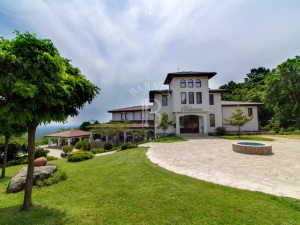
The prices for a villa close to the sea are about ?30,000 and for the ones in rural areas they can be even around ?5,000. In many cases though, you will have to make some refirbishments in order to have the usual standards of living. In all cases, it is advisable to personally visit the property and not to buy it after judging only the photos.

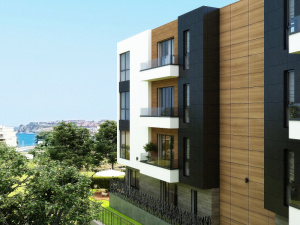
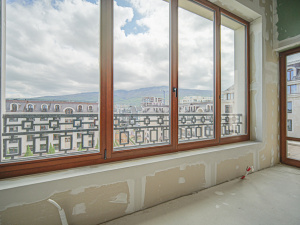
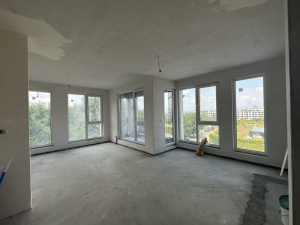
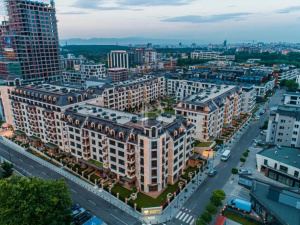
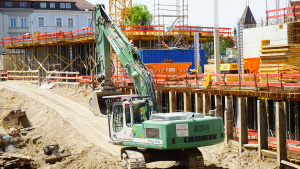
You can also consider the purchase of a new development under construction, which is now wide spread practice, especially in the capital, in ski resorts and on the coast. Properties may be purchased 'off plan' either directly from the developer or via brokers.

Law on foreigners owning property in Bulgaria
According to the Bulgarian Constitution, foreign individuals can buy buildings but not land. Therefore, the most common method for foreigners buying property in Bulgaria where they also wish to own the land is to set up a company which then owns the land and the buildings. The law is expected to change on this within the short to medium term with the expected entry of Bulgaria into the European Union (2007). This historic restriction is one of the reasons why property in Bulgaria is so competitively priced compared to Western and Central Europe. Current amendments to the constitution will allow citizens of countries with which Bulgaria has agreements on land sales to buy land in 2007 when the amendments would come into effect, while EU citizens will have the right to buy land in 2014. In the meantime a company is still required for land ownership.

If your purchase includes land a Limited Liability Company (OOD) will need to be formed.

Who can form a Limited Liability Company & how?
A foreign or Bulgarian person (judicial or physical). The company owners will be liable for the company's obligations to the value of his/hers share in the company's registered capital. Articles of Incorporation are prepared & signed by all shareholders.

A company bank account is opened to collect all share capital. The minimum share capital required is 5,000 leva. Shareholders at time of registration must have paid up at least one third of their respective shares. It is required that at least 70% (3,500 leva) of the capital is raised at time of registration. The company exists from the moment it is added to the Commercial Register of the district court of where the company will be based. The entry is made upon issue of a district court decision for the incorporation. The following documents must be available at the time of the submission of the application to the district court:

1. Articles of incorporation;

2. Memorandum for appointment of Directors;

3. Proof that each shareholder has paid at least one third of its interest, but not less than 10 leva;

4. Proof that at least 70 per cent of the registered capital has been paid.

The Bulgarian State Gazette is the official paper within which all Bulgarian legislation is published. Publication of the company entry in the Commercial Register does not complete your company formation, it announces to the general public the act of formation. The process of forming your company can take anywhere between a few days to a few weeks. Finally, your new company will need to register immediately with the National Tax Register Authority. The costs involved are: 3,500 leva = 70% share capital.

Administrative costs (payable to the state & registration court) are 250 leva (just over ?70). This is the minimum capital that you need to raise for registration. Once the entire share capital has been paid up these funds can be accessed and withdrawn. Allow betwen EUR 500 - 700 for charges relating to the formation and registration of your company.

Real Estate Tax
According to the Bulgarian tax legislation the buyer has to pay notary and municipal fees. The notary fees are paid on the higher of the market price or the book value of the property at varying rates, with the maximum being BGN 3,500. In addition, 2% of the market value of the property is paid to the municipality where the property is situated upon completion of the purchase.

Local taxes and rates
The owner of a building or land in Bulgaria has to pay a property tax. The tax is equal to 0.15% of the book value of the property. There are no local taxes for arable land. The owners also have to pay waste-collection fees which are determined when the ownership is registered with the municipality, which should be done within 60 days of completion.

Value Added Tax
Transactions with land and lease of property for residential purposes are exempt from VAT (Value Added Tax), all other real estate transactions are subject to VAT of 20% if the seller is VAT registered. The buyer is entitled to a VAT refund, provided that it is registered for VAT purposes.

Real Estate Agencies
The Real Estate Agencies have varying charges for their services - from 3% of the purchase price to about 10%! Some agencies can also set up a “minimum” commission which does not depend on purchase price. Some agents may also charge for the viewing of the properties.

E-MAIL ALERTS
SAVED PROPERTIES (0)